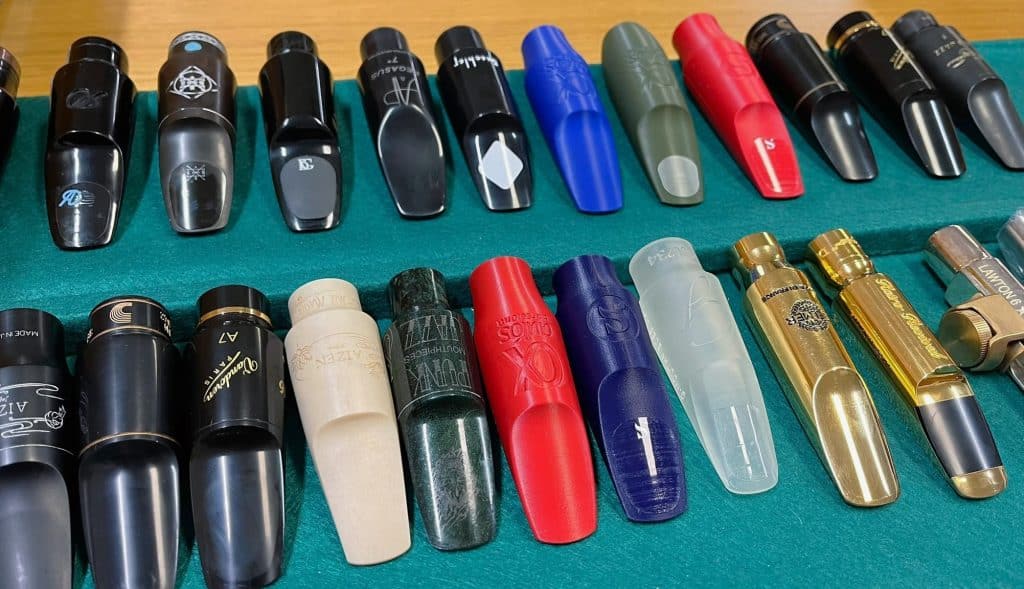
Saxophone mouthpieces are mainly made from three materials: ebonite (hard rubber), metal and plastic. There are also less common options, such as glass, wood or 3D-printed resins.
The material affects the feel, durability and price, as well as how the sound is perceived. However, the internal design, with its chamber and baffle, has a greater influence than the material on the final tone.
In this article, we look at what each material has to offer and which brands and models use them, so that you know what you’re buying.
Ebonite: the classic material
Ebonite, or hard rubber, is the most widely used material in mouthpieces for saxophones, both for classical as well as for jazz. It is produced by heating natural rubber with sulphur until it hardens, and it was patented in 1851; by the early 20th century it already dominated the market.
Its success is down to the fact that it is resistant to moisture, can be machined with precision and produces parts that are highly consistent from one unit to the next. Its black colour is purely cosmetic: it resembles ebony, but this does not make it sound any better.
Examples of ebonite mouthpieces:
- Selmer Paris S80, Concept and S90, Vandoren V5, for classic and versatile use.
- Meyer and Otto Link, two jazz classics manufactured by J.J. Babbitt.
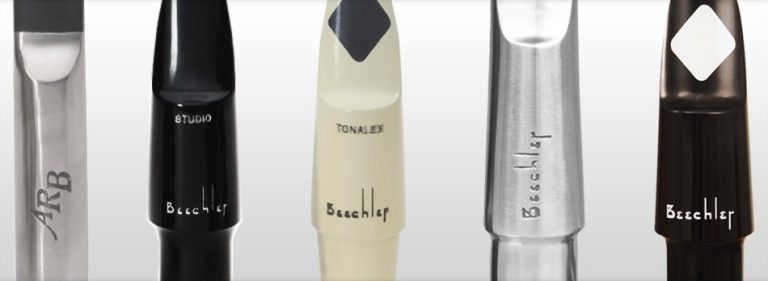
- Vandoren V16, Select Jazz, Drake, Aizen, Retro Revival, Boston Sax Shop, amongst others, which tend to emulate the old Meyer and Otto Link models.
- Beechler, Claude Lakey, Vandoren Java or Jumbo Java, with a bright and powerful sound, widely used in rock, blues, funk and pop.
Metal: brass, steel and plated finishes
The most common metal used in mouthpieces for saxophones is brass, which is usually plated with a coating of silver or gold. Bronze and stainless steel are also used, and these metals are particularly popular amongst jazz and rock saxophonists.
Metal allows for walls that are thinner, which is something interesting in tenor and baritone saxophones. With identical dimensions, a metal mouthpiece tends to sound somewhat brighter than one made of ebonite, but the difference is minor.
Examples of metal mouthpieces:
- Otto Link, made of brass; a classic of jazz, above all on the tenor saxophone.
- Vandoren V16 Metal, which exists alongside its ebonite version.
- Selmer Jazz Tribute, made of brass with a gold plating. The latest creation from Selmer.
- Berg Larsen, which offers versions in stainless steel and bronze. A classic from the past, with a sound that is contemporary.
- Beechler Bellite, sound sharp and brilliant, typical of Pop and Jazz Rock
- Lawton, made of stainless steel and brass, versatility across styles of modern music such as funk, rock, pop or contemporary jazz
- Peter Ponzol, made of stainless steel and aluminium anodised, which combines a sound that is powerful and bright with excellent projection
- Retro Revival, replicas of vintage mouthpieces such as Otto Link, Dave Guardala, Dukoff
Plastic, resin and other materials
Plastic is cheap, lightweight and strong, which is why almost all the studio mouthpieces are made of plastic the saxophones used for study have a mouthpiece made of plastic. The classic example is the Yamaha 4C, designed for those just starting out.
In the last few years, there have been developments in technical resins and 3D printing. Aulós, G-Mouthpiece and Syos manufacture their mouthpieces using additive manufacturing. This enables design interiors to custom specifications and produce them in just a few days. In addition they offer a good range of colours.
There are two minority materials remaining:
- Glass: is produced in small batches, such as those by the Italian company Pomarico. It is fragile and must be handled with care.
- Wood: is rare and prized for its warm tone, but it needs to be sealed to protect it from damp.
Material versus design
That metal sounds bright and ebonite dark is a cliché: the tone depends above all on the internal geometry of the mouthpiece. Several manufacturers and shops agree on this, although some admit that, with measurements that are identical, the metal may sound somewhat more brilliant.
The four factors that carry the most weight are these:
- Baffle: the inner “ceiling” behind the tip. One high up and close to the reed produces a sound that is bright and powerful; one low, one sound more mellow.
- Chamber: a chamber large gives off a sound deep and rich; a small one, one more focused one.
- Tip opening: a small opening is easier to play and produces a more controlled sound; a large one allows for greater volume and a fuller sound, but with less control and less stable intonation. There are no set rules, but generally speaking, classical musicians tend to play with small apertures and hard reeds, whilst those playing popular music tend to use medium or large apertures and medium-hard reeds. This is where personal preference, taste and comfort come into play for each musician.
- Table curve (facing): determines how much free space the reed has to vibrate and how the mouthpiece responds when blown, which influences the resistance and response across the different registers.
It is worth that it is advisable to compare mouthpieces by their sizes and not just by their material. Where the material does make a difference is in comfort, resistance to impacts and the feel on the lips, especially when cold or hot.
Care and how to choose
To start with, the most sensible choice is a mouthpiece made of plastic or ebonite mouthpiece with a small opening, which is easier to play. Many teachers recommend changing it between 6 and 12 months after starting , when the student already knows which sound they are looking for.
When it comes to choosing, these guidelines are helpful:
- Classic or band: ebonite, small opening and straight deflector.
- Jazz: ebonite or metal, with a larger more wider opening and a taller deflector.
- Pop, rock and funk: metal or ebonite with a high baffle, which provides more brightness and volume.
- Care: clean the mouthpiece with warm water, do not leave it in the sun if it is made of ebonite and handle the glass with care. Avoid dropping it; plastic and ebonite can break, and metal can become deformed.
If you can, try a few out before you buy: the best mouthpiece is the one that suits your reed, your saxophone and your playing style.
Conclusion
Ebonite remains the benchmark material; metal offers a different feel and a more striking finish; and plastic is the practical choice for beginners. 3D-printed resins are the latest innovation. That said, it is the internal design, not the material, that has the greatest impact on the sound.
If you want to compare models and receive advice, at brass-market.com we can help you to find the mouthpiece that best suits your saxophone. What’s more we have a soundproof booth, so that you can try out mouthpieces and find your sound. The trials are free!