Wind instruments are made from two main families of materials: copper alloys for the so-called ‘brass’ and hardwoods tropical woods for a good proportion of the ‘woods’. But the reality is even richer: there are flutes made of silver, saxophones made of brass which are considered to be made of ‘wood’ and clarinets made of plastic which sound very good.
Knowing what your instrument is made of helps you to understand its tone, weight, durability and the care it requires. In this article, we look at the most common materials, alloys and finishes used in trumpets, trombones, French horns, tubas, saxophones, flutes, clarinets, oboes and bassoons.
A useful clarification: the classification into ‘brass’ and ‘woodwind’ instruments does not depend on the material, but on how the sound is produced. In brass instruments, the musician’s lips vibrate against a mouthpiece; in woodwind instruments, the sound is produced by a reed (single or double) or by the edge of a lip plate, as in the flute. That is why the saxophone and the flute, although made of metal, belong to the woodwind family.
Metals: from copper to brass
Almost all brass instruments are made from copper, a soft, ductile metal that is easy to work with. It is almost never used in its pure form: it is combined with other metals to increase its hardness, resistance to corrosion and to achieve a specific tone.
- Copper: the basis of all the alloys. Pure is used in some bells, where it produces a sound that is deeper and warmer.
- Zinc: alloyed with copper forms brass. The more zinc there is, the more brilliant the colour and the more hard the alloy.
- Tin: together with copper forms bronze, more resistant to corrosion. It is used in bells of high quality and in some saxophones.
- Nickel: hardens and provides resistance to wear and tear. It is found in alpaca (silver German) and in monel, and it is also used as a coating.
- Silver: is used in baths and, in the flute or the saxophone, as the material for the body of the instrument itself.
The most common copper and zinc alloys are distinguished by their proportions and their colour:
| Alloy | Approximate composition | Appearance and character | Common use |
|---|---|---|---|
| Yellow brass | 70 per cent copper, 30 per cent zinc | Bright yellow; clear, resonant tone | Trumpets, trombones and saxophones; it is the most widespread |
| Gold-plated brass | 80 per cent copper, 20 per cent zinc | Warm golden colour; a slightly rounder tone | Mid-range and high-end trumpet and trombone bells |
| Rose brass | 85 per cent copper, 15 per cent zinc | Reddish; a dark, warm tone | Professional trombone, French horn and trumpet bells |
| Alpaca or German silver | Copper, nickel and zinc (excluding silver) | Silver-white; very hard-wearing | Trombone slides, keys for flutes and other instruments, mechanisms |
| Monel | Nickel-copper alloy | Metallic grey; very hard and corrosion-resistant | Valves for trumpets and other brass instruments |
The proportions vary depending on the manufacturer, and many brands adjust their formula. What matters is the general trend: more copper produces a darker, warmer sound, whilst more zinc produces a brighter, more direct sound.
What alloy is each instrument made of?
Trumpet
Most trumpets are made from yellow brass (70/30). Professional models usually feature bells made from gold brass or red brass, which produce a warmer, darker tone. The valves are made from Monel or stainless steel, as they need to slide smoothly and withstand years of use.
Trombone
The trombone combines several materials. The bell can be made of yellow, gold or red brass, and this is where the difference in timbre is most noticeable. The inner slides are usually made of nickel silver or stainless steel, and the outer slides of brass or nickel silver, to ensure smooth and stable sliding.
Saxophone
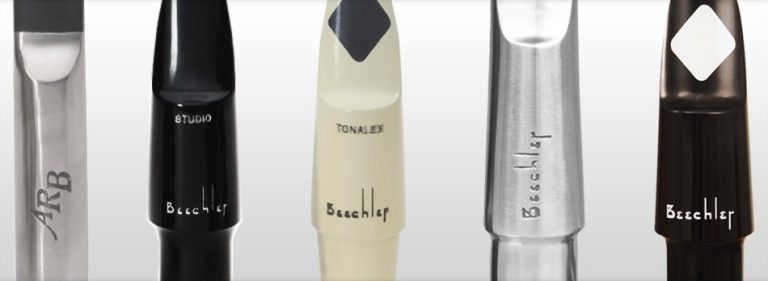
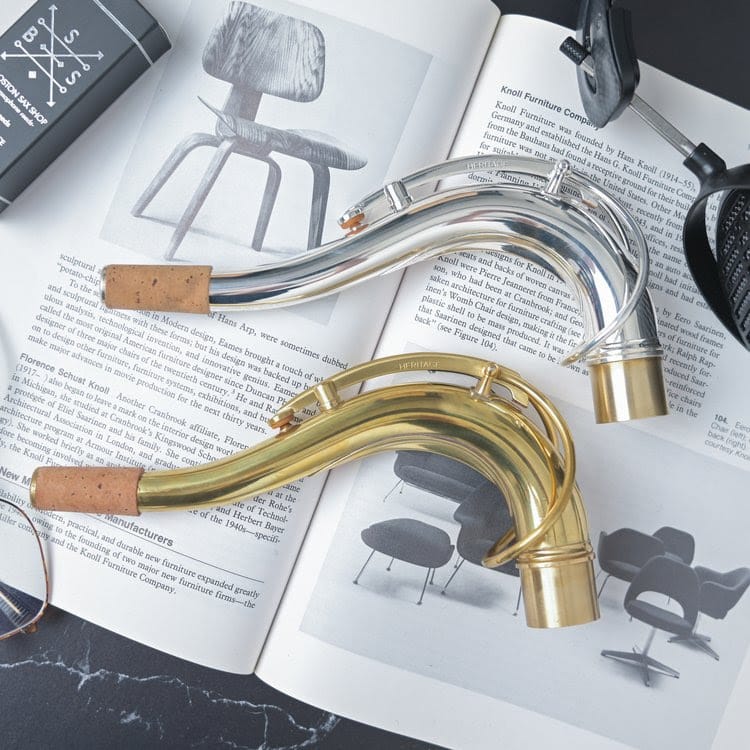
Although it is classified as a woodwind instrument, the saxophone is made of brass, usually yellow brass with a copper content of around 70 per cent. Some high-end models use bronze or brass alloys with a higher copper content, in order to achieve a darker, fuller-bodied sound. Even the most expensive models can be made of solid silver, and there are some with a solid gold neck. The key mechanism is made of brass, and the pads that seal the holes are made of leather or synthetic materials.
Flute
The flute is the instrument where the material varies most depending on the level:
- Material: alpaca (copper-nickel) with a silver or nickel plating. It is durable and affordable.
- Intermediate: solid silver head and silver-plated body and keys.
- Professional: sterling silver (925) for the head, body and mechanism. The most exclusive models are crafted from 9-, 14- or 18-carat gold, and even platinum.
Silver produces a bright, flexible tone; gold, a darker, fuller sound. In the flute, the headjoint has a greater influence on the tone than the rest of the instrument.
French Horn
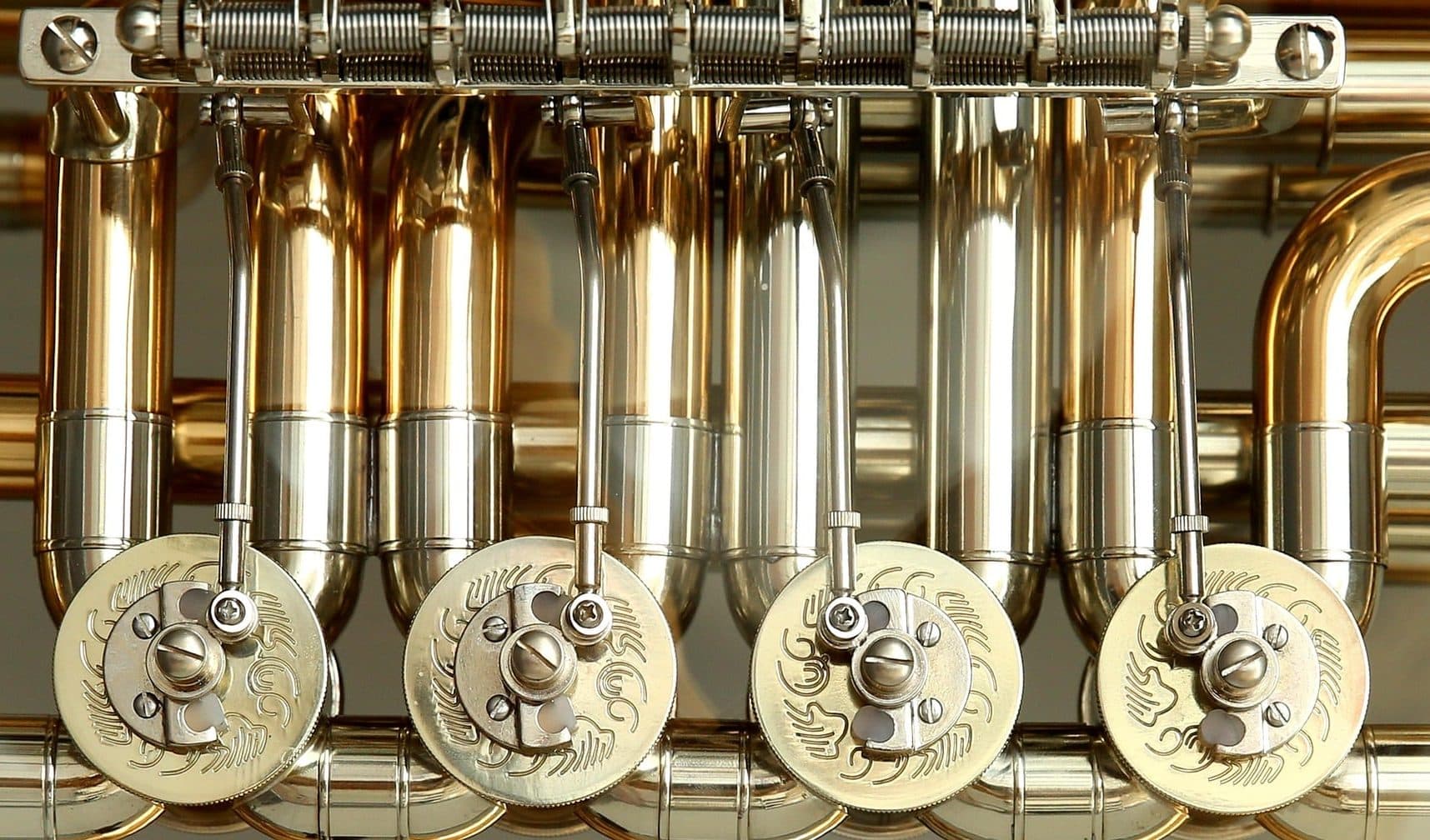
The French horn is mainly made from yellow brass and gold brass. Its large bell, made from very thin sheet metal, is the key factor defining its timbre: gold or red brass produces a darker, more enveloping sound. There are also French horns made from nickel silver (German silver), a harder material which, according to many players, produces a more compact and focused timbre. The rotary valves (rotors) are usually made of brass or nickel silver.
Tuba
The tuba is almost always made of yellow brass, although some professional models use gold or red brass to produce a rounder sound. It is the instrument with the most metal in the family, so the material and thickness of the sheet metal have a significant impact on its weight and price. The valves – whether piston or rotary – are made of Monel or stainless steel. Silver plating is very common on tubas, as is lacquer. Band sousaphones may be made of fibreglass or PVC to reduce weight.
Finishes: lacquer, silver, nickel and gold
Bare metal rusts and becomes stained by sweat, which is why almost all instruments have a finish. As well as providing protection, the finish alters the appearance, the feel and, according to many musicians, a nuance of the sound. This last point is highly subjective and much debated: the differences are usually minor and depend more on the musician than on the finish itself.
| Finish | What is it? | Advantages | Drawbacks |
|---|---|---|---|
| Clear varnish | A thin layer of varnish on the brass | It protects against rust, is economical and easy to maintain | Over time, it wears out and leaves some areas uncovered |
| Gold lacquer | Hairspray with gold tint | A warmer, more intense golden hue | Just like clear varnish |
| Silver | A layer of silver deposited onto brass | A bright appearance, a pleasant feel and a tone that is perceived as brighter | It becomes tarnished over time and needs polishing |
| Nickel-plated | Nickel plating | Highly resistant to wear and impact | It may cause an allergic reaction in people who are sensitive to nickel |
| Dorado | Gold plating, sometimes applied to specific parts | High corrosion resistance and a luxurious finish | It is expensive; it is usually applied only to bells, necks or decorative details |
| Unfinished (raw) brass | Bare metal | A sound that is perceived as more free and open | It’s getting dark and needs a proper clean |
Woodwind instruments: clarinet, oboe and bassoon
In the case of woodwind instruments, the body is turned from very dense and stable woods, which are hardly affected by changes in humidity and temperature. Before being worked, the wood is left to dry for years, and even then it requires care: it must never be exposed to sudden changes in temperature.
Clarinet
The wood of choice is African granadilla (Dalbergia melanoxylon), also known as African ebony or mpingo. It is black, very hard and dense, and produces a warm, well-defined tone. Practice models are usually made of ABS or resin, which are much more resistant to knocks and moisture. Some brands offer composite materials—a mixture of granadilla powder and resin—which approximate the sound of wood whilst carrying a lower risk of cracking. Other woods commonly used include cocobolo and mopane.
Oboe
The oboe is also mainly made from granadilla wood. Other options include rosewood, cocobolo and palo violeta, which are used less frequently. Beginners’ models are made from resin or plastic, which are more stable. The quality of the double reed is very important for the oboe, and many oboists carve their own by hand.
Basoon
The bassoon breaks the mould: it is usually made from maple, particularly European maple (Acer pseudoplatanus), which has a flamed grain and a light colour. It is a slightly less dense wood than rosewood, making it suitable for a long, large-diameter tube. The body is varnished inside and out, and student models may be made of plastic. It is constructed in several parts, and the leadpipe (the metal tube that holds the reed) is usually made of brass or silver.
A note on sustainability
Passionwood and other species of the genus Dalbergia grow slowly and are subject to international regulations (CITES), with exemptions for finished instruments. For this reason, the industry is exploring alternatives, such as composite materials, and works with certified suppliers. If you are buying a wooden instrument, ask about the origin of the raw material.
Conclusion: how to choose based on the material
The material defines the character of the instrument, but it does not, on its own, determine its quality: the design, the precision of the craftsmanship and, above all, the musician are just as important. These points will help you decide:
- To begin with: yellow brass with a lacquer finish on trumpets, trombones and saxophones; silver-plated nickel silver on flutes; ABS or resin on clarinets, oboes and bassoons.
- For a warmer, darker sound: gold- or red-plated brass on brass instruments, or a flute with a silver headjoint.
- For durability: a nickel-plated or silver-plated finish, and composite materials rather than wood if the weather is changeable.
- To look after your instrument: clean it regularly, store it in its case and, for wooden instruments, avoid sudden changes in humidity and temperature.
If you’re unsure which one to choose from several models, the best thing to do is to try them out. At brass-market.com you can browse our catalogue and ask us for advice to find the instrument that best suits your level and your style.