The entrepreneurial spirit of Yamaha’s founder, Torakusu Yamaha, reflected Japan’s enthusiasm at the turn of the 19th century for new technologies and the ability of its middle-class entrepreneurs to develop products based on these new tools. Raised in what is now Wakayama Prefecture, Yamaha received an unusual education for his time from his samurai father, a surveyor with broad interests in astronomy and mechanics and an extraordinary library. The Meiji Restoration, a government-subsidised effort to accelerate technological development in the late 19th century, put educated people like Yamaha in a position to capitalise on the new growth.
At the age of 20, Yamaha studied watch repair in Nagasaki with a British engineer. He formed his own watchmaking company, but was unable to stay in business due to lack of money. He then took a job repairing medical equipment in Osaka after completing an apprenticeship at Japan’s first Western medical school in Nagasaki.
As part of his work, Yamaha repaired surgical equipment in Hamamatsu, a small fishing village on the Pacific coast. Due to the isolation of his area, a school in the town asked him in 1887 to repair a Mason & Hamlin pipe organ manufactured in the United States. Seeing the commercial potential of the instrument in Japan, Yamaha produced his own functional version of the organ within a year and then established a new business in Hamamatsu to manufacture organs for Japanese primary schools. In 1889, he established the Yamaha Organ Manufacturing Company, the first Japanese manufacturer of Western musical instruments. At the same time, the government granted Hamamatsu municipal status, which provided it with railway service and made it a regional centre of commerce.
Western musical traditions interested the Japanese government, which encouraged and catered to the growing enthusiasm for Western ideas. While Yamaha’s technical education enabled him to manufacture a product, the government’s investment in infrastructure enabled him to create a business. Yamaha’s organ factory used modern mass production methods, and by 1889 it employed 100 people and produced 250 organs per year.
During the 1890s, the upright piano surpassed the pipe organ in popularity in US homes due to its lower cost. Yamaha saw the potential of this market. In 1897, it changed the name of its company to Nippon Gakki Co., Ltd., which literally means ‘musical instruments of Japan.’ It opened a new factory and headquarters in the Itaya-cho district of Hamamatsu.
The Japanese government not only standed industrialisation through heavy manufacturing, but also encouraged new companies to contact foreign markets directly. Expansion into pianos required further research, so the Japanese Ministry of Education sponsored a Yamaha tour of the United States in 1899. The aim was to study piano manufacturing and establish suppliers for the materials needed to produce pianos in Japan. Within a year, Nippon Gakki produced its first piano. Government and institutional orders were the first to be completed, including some for the Ministry of Education. In 1902, using American materials and German technology, Nippon Gakki unveiled its first grand piano. In 1903, the company produced 21 pianos.
Nippon Gakki showcased its new pianos at select international exhibitions. Between 1902 and 1920, the company received awards for its pianos and organs that had never before been given to a Japanese manufacturer, such as a Grand Prize at the 1904 World’s Fair in Saint Louis.
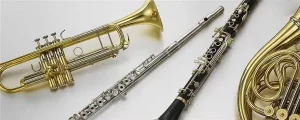
Yamaha’s entrepreneurial spirit continued unabated, and despite the death of its founder, the company continued to expand to this day, known for its incredible diversification (wind instruments, guitars, drums, keyboards, engines, electronics, motorcycles, boats, etc.), becoming one of the largest companies in the world. And it all started with a young man who repaired watches…